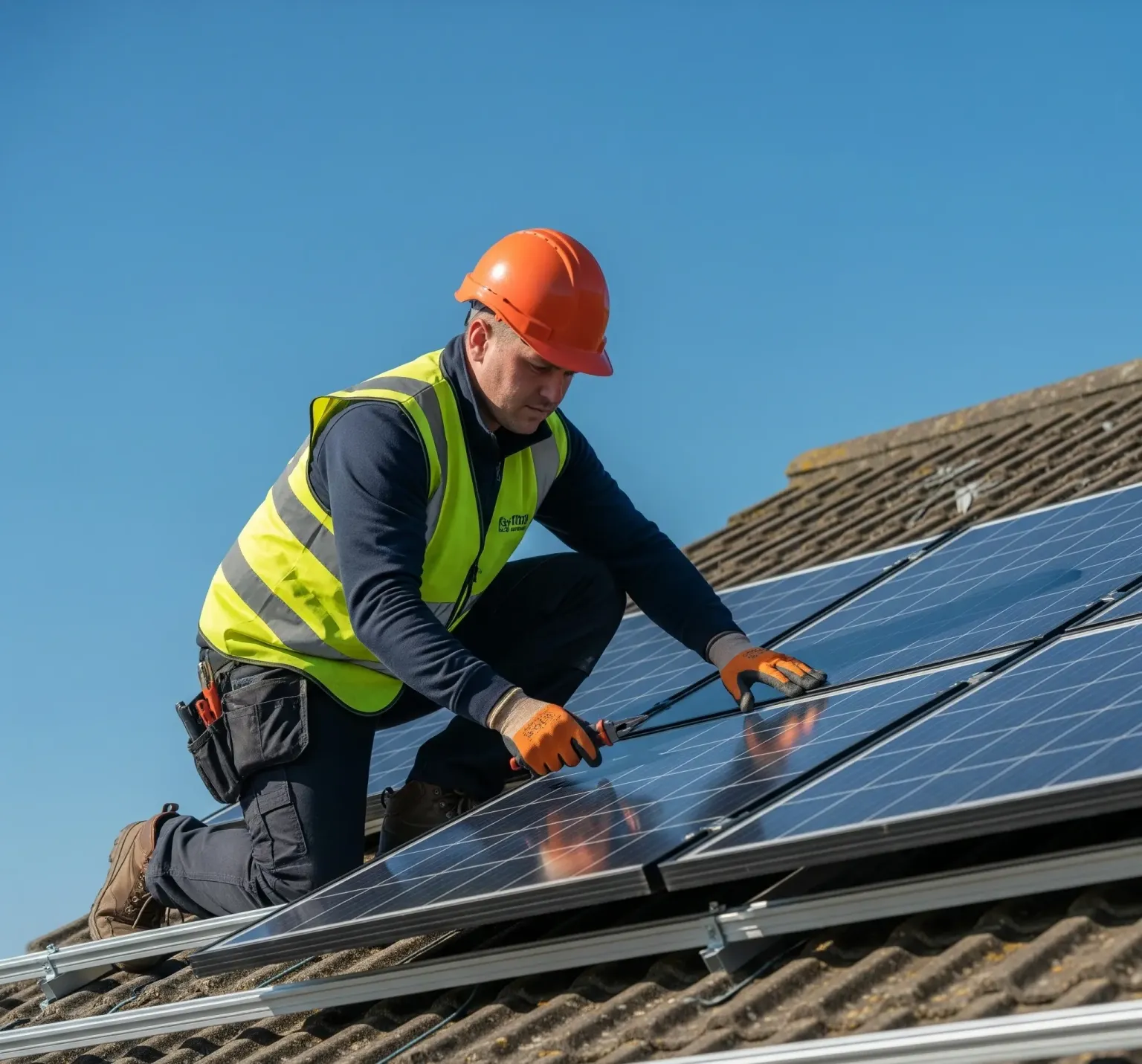
Solar PV for homes, farms and businesses across County Kerry. Safe Electric registered (A5964), full grid connection and certification.


Kerry isn't Spain, and anyone telling you otherwise is selling something. But solar panels run on daylight, not heat, and they generate on overcast days too — just less. A properly sized system on an Irish roof will cover a meaningful share of a household's daytime electricity across the year.
The honest version: solar works best if you use power during the day, or you store it. A house where everyone's out from eight to six and the immersion runs at night will see less benefit than one with someone home, an EV on the drive, or a battery fitted.
We'll tell you which you are before you spend anything.
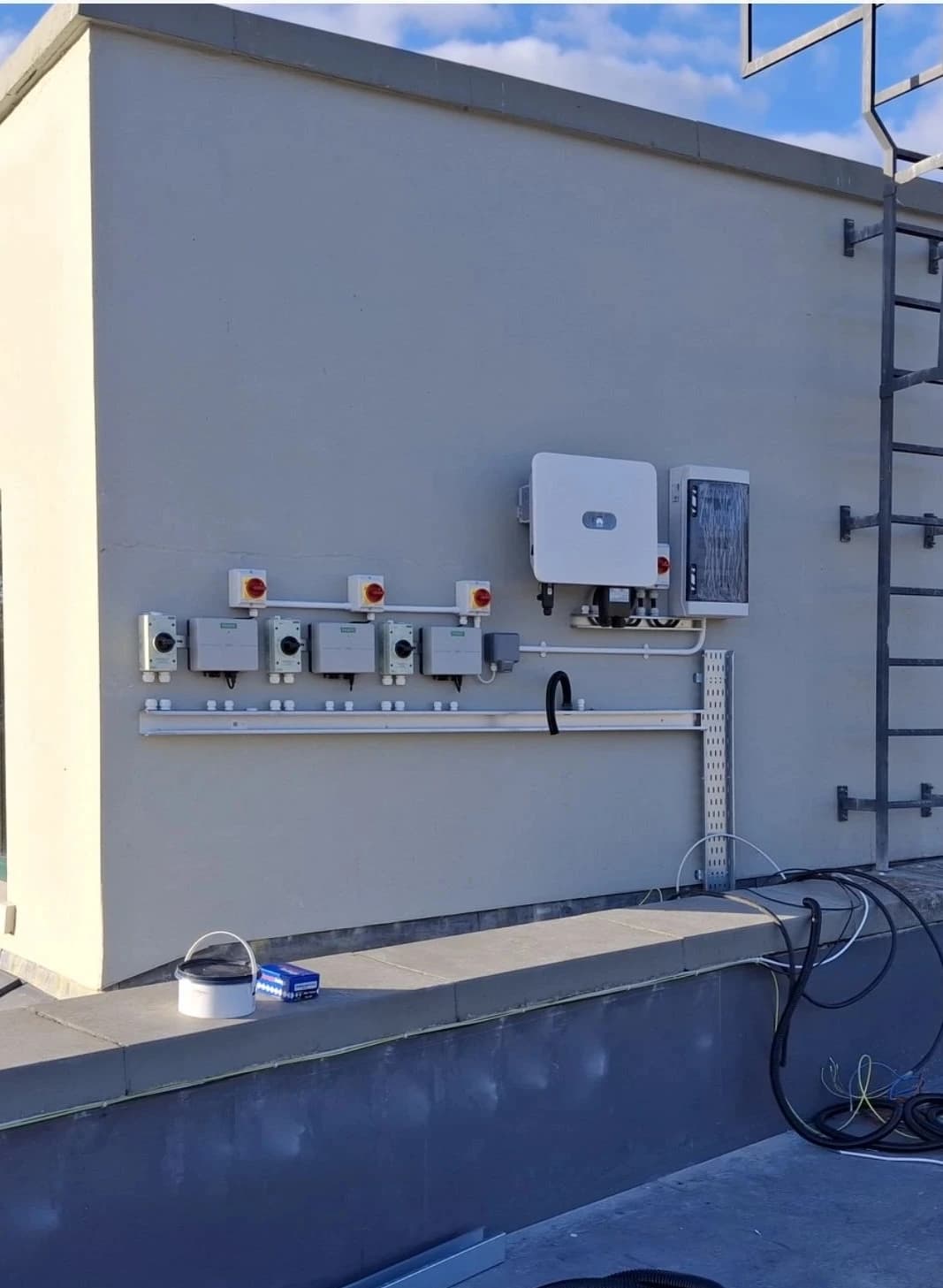
This is where solar pays back fastest in Kerry, and it's the bit most installers skip.
Milking parlours, coolers and vacuum pumps run through the middle of the day, which is exactly when panels generate. That daytime load means more of what you produce gets used on site rather than exported at a lower rate.
We already do agricultural electrical work across Kerry — sheds, yards, parlours — so we're sizing the system around how the farm actually runs, not a spreadsheet average.
Sheds and outbuildings often suit solar better than the house anyway: bigger roof area, simpler mounting, no planning concerns about how it looks from the road.
If you're out on the Dingle or Iveragh peninsulas, or anywhere with a sea view, salt air is a real factor. It affects mounting hardware and where the inverter should sit.
We use appropriately rated fixings on exposed sites and site inverters out of the weather rather than on an exposed gable. It costs a little more up front and saves replacing corroded hardware in five years.
Wind loading matters on exposed sites too. That changes the mounting spec, so we survey rather than assume.
A battery stores what you generate during the day for use in the evening, which is when most Irish households actually use power.
It also lets you charge the battery on a cheap night rate and run the house off it during expensive hours, whether the sun shows up or not.
Worth costing separately. It adds to the price and it changes the payback maths, so you should see both numbers before deciding.
The grant is worth up to €1,800.
It's paid at €700 per kWp for the first 2 kWp, then €200 per kWp from 2 to 4 kWp. So a 4 kWp system or larger gets the full €1,800, and smaller systems get proportionally less.
The rules:
There's also no VAT on domestic solar supply and install, which is separate from the grant and applies automatically.
The grant has been held at €1,800, but the stated government intention is to reduce it as panel costs fall. Check seai.ie for the current figure before you commit.
Anything you generate and don't use goes back to the grid, and your supplier pays you for it under the Clean Export Guarantee. Rates differ between suppliers, so it's worth checking what yours pays before you switch or sign up.
It's not a fortune, but it changes the payback calculation, particularly on larger systems.

Survey. We look at roof orientation, pitch, shading and your existing board, and check what your actual usage looks like.
Design and quote. Size, expected output, and what it costs. No obligation.
Grant approval, if applicable. This has to be done before work starts.
Install. Most domestic systems are one to two days.
Grid connection and certification.
BER assessment, if you're claiming the grant.
Tralee, Killarney, Listowel, Dingle, Killorglin, Castleisland, Kenmare, Cahersiveen, Ballybunion and the rest of the county.
Yes, just not as well as somewhere sunnier. Panels run on daylight rather than heat and generate on overcast days at reduced output. The system gets sized around realistic Irish figures, not best-case ones.
Panels typically carry performance warranties measured in decades. Inverters have a shorter life and are usually the first thing to need replacing.
Not by default. A standard grid-tied system shuts down in an outage for safety reasons. Certain battery setups can keep essential circuits running, but it has to be specified that way from the start.
Most domestic rooftop solar is exempt, though there are conditions and some exceptions, including certain protected structures and properties in designated areas. We'll flag it if we think it applies to you.
Yes, and it's worth doing in one visit. Charging the car off your own roof during daylight is where the running cost saving actually lands.
EV charger installation in Kerry →Often a better fit than the house. More roof area, simpler mounting, and farms tend to have the daytime demand that makes solar pay.